
Subscribe and receive email notifications of new blog posts.
 RSS Feed
- 2024 | 10 Posts
- 2023 | 48 Posts
- 2022 | 48 Posts
- 2021 | 48 Posts
- 2020 | 49 Posts
- 2019 | 46 Posts
- 2018 | 52 Posts
- 2017 | 110 Posts
- 2016 | 78 Posts
- 2015 | 7 Posts
12
Is a Clover Lawn Right for You?
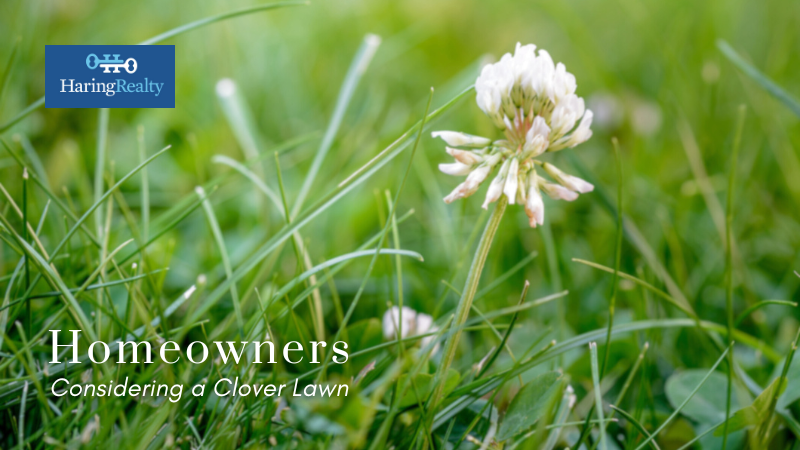
A clover lawn? Sounds outrageous, right? After all, most of us think of clover as a weed. So why would anyone replace their lush green grass with this humble weed? The fact is, a clover lawn is far less troublesome and expensive than a traditional lawn. So maybe it's worth rethinking that expensive turf/sod project you planned for the property you acquired from those Ashland homes for sale.
Grass lawns are not only expensive; they also require considerable chemicals—pesticides, herbicides, and fertilizers—that harm the environment to produce that lush green look we're so enamored of. Plus, grass needs lots of water to keep it green and healthy. In times of drought, heat waves, and water uncertainty, even in the usually wet Northwest, a clover lawn may provide a worthy replacement for grass.
Homeowners have been told for decades to strive for a lush grass lawn, despite the cost and the need for chemical amendments. But imagine that you can have the look without doing environmental harm or breaking the bank. So here are our REALTORS® to tell you how.
Clover Lawns Are Going Viral
The popularity of clover lawns is growing as millions of viewers share images of what a clover lawn can look like. Homeowners who have taken the plunge and replaced grass with clover share the results on TikTok and other platforms and claim they're helping break our addiction to grass lawns.
In general, clover lawns are defined as patches of green where clover moves in and starts weaving its way through the lawn. You wouldn't necessarily want a complete clover lawn—a monoculture where, like with grass lawns, you have to spend time picking dandelions or other weeds. With clover, you can have other plants growing alongside.
Have some bare patches? Clover—also known as shamrock—can be planted in bare places where grass doesn't grow, as it doesn't need lots of sunlight. What's more, it is heat- and cold-tolerant, so it will grow easily in our climate. Further, you don't even need to worry about mowing clover.
One of the main types of clover being used in lawns is white clover (Trifolium repens), or Dutch white clover. It used to be found in lawns prior to the 1950s, but as use of pesticides and other chemicals grew, so did the propensity to rid the lawn of every plant except the grass.
Another advantage of clover is that it attracts beneficial insects such as bees, but it also attracts parasitoid wasps. These tiny wasps feed on aphids, scales, and whiteflies. While the wasps are harmless to humans, they help to control pests in your yard.
One of the premier benefits: Clover helps fix nitrogen in the soil, thus benefitting nearby plants. It virtually creates its own fertilizer and never needs additional chemicals.
Clover Cons
There are a few cons involved with planting a clover lawn. For instance, if you'd rather not have bees around, be forewarned that they are attracted to clover. Another issue is that clover won't survive high traffic, so if you have much-used areas in your lawn, it's best to create a mixed clover/grass passageway. What's more, it's a short-lived perennial. That means you'll probably have to reseed every few years. But clover is inexpensive, so you can plan on it being an affordable lawn redo.
Want to know more about creating a less expensive, healthier lawn? Contact us today.